

A beach bonfire sounds pretty hard to beat: sunset over the Pacific, a few chairs in the sand, and something warm to sit around when the Oregon Coast starts feeling very much like the Oregon Coast.
And in Lincoln City, you can actually do it.
A bonfire on the beach is generally allowed on Lincoln City beaches as long as there are no temporary fire restrictions in effect and you follow Oregon State Parks rules for where and how the fire is built.
That last part matters. Oregon’s beaches are managed by Oregon State Parks, and a bonfire comes with rules designed to protect other visitors, wildlife, vegetation, and the beach itself.
So before you grab the firewood and marshmallows, here’s what you need to know about having a beach bonfire in Lincoln City.
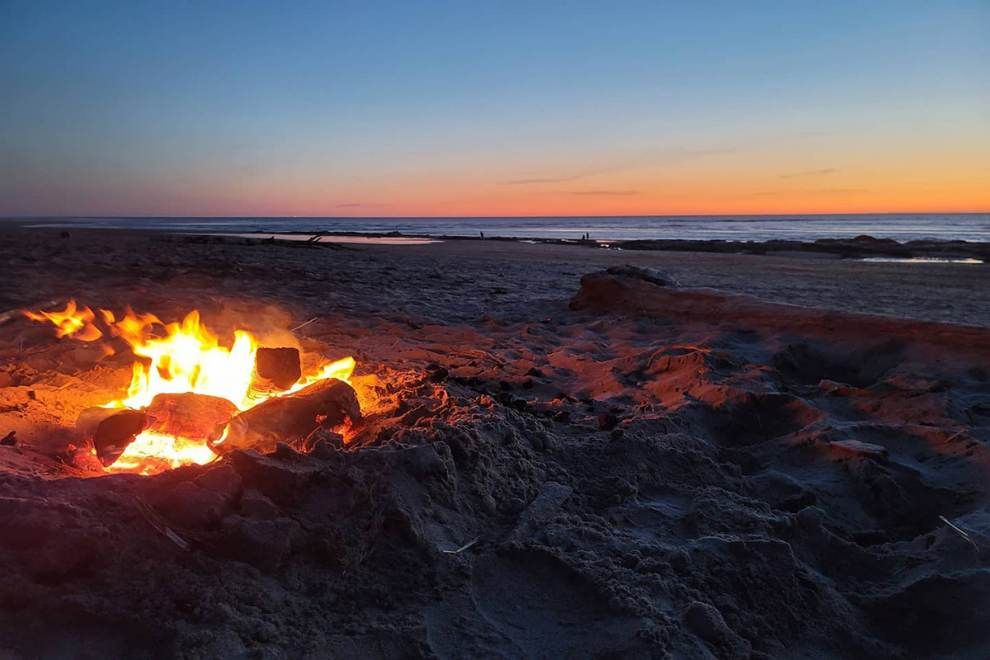
Are beach bonfires allowed in Lincoln City?
Yes. A small recreational beach bonfire is generally permitted on Lincoln City beaches where fires are allowed.
Oregon State Parks permits qualifying recreational fires up to 3 feet by 3 feet. Explore Lincoln City recommends keeping a bonfire even smaller, around 2 feet by 2 feet.
There is one major exception: temporary fire restrictions can override the usual rules.
During periods of elevated fire danger, Oregon State Parks may prohibit wood fires or other open flames on beaches. Restrictions can change throughout the year, so don’t assume a beach bonfire is allowed simply because you had one during your last Lincoln City vacation.
Always check current Oregon State Parks fire restrictions before heading to the beach.
Where can you have a beach bonfire?
Choose an area of open, dry sand for your beach bonfire. Oregon State Parks requires recreational beach fires to be at least 25 feet away from vegetation, driftwood, other combustible materials, and beach access points.
Don’t build a bonfire:
- In beach grass
- In or near dunes
- Next to piles of driftwood
- Near logs or other combustible debris
- Beside a beach access point
- Anywhere covered by a temporary fire restriction
You should also pay attention to the ocean. A stretch of sand may look perfect when you arrive and become considerably smaller as the tide comes in. Check the tides before setting up your beach bonfire, and stay alert for sneaker waves throughout the evening.
How big can a beach bonfire be?
Oregon State Parks allows small recreational beach fires measuring 3 feet by 3 feet or smaller when fires are otherwise permitted. Explore Lincoln City recommends an even more conservative 2-foot-by-2-foot beach bonfire.
That’s plenty. A bonfire doesn’t need to become a beach inferno.
Keeping the fire small makes it easier to control, reduces the chance of wind carrying embers, and makes completely extinguishing it much easier when you’re ready to leave.
What can you burn in a beach bonfire?
Bring your own natural, untreated firewood for your bonfire. Oregon State Parks prohibits burning wood containing attached metal, nails, glass, plastic, or other materials. That means pallets are out.
You also shouldn’t treat the beach itself as your firewood pile. Leave driftwood and beach logs where you find them rather than tossing them into your beach bonfire. Large pieces of driftwood can be difficult to control and fully extinguish.
Small pieces of appropriate firewood are a much better option. Bringing your own also means you won’t spend the first half hour of sunset wandering around looking for something combustible.
Can you burn driftwood in a beach bonfire?
No. Leave the driftwood alone. Lincoln City’s beach fire guidance tells visitors not to burn driftwood or beach logs. Your beach bonfire should also be positioned well away from driftwood piles because sparks and embers can ignite dry material nearby.
That giant log may look like it would make an impressive fire. It would also make an impressively difficult fire to put out. Bring appropriately sized untreated firewood instead.
What should you use to start a beach bonfire?
Oregon State Parks requires beach fires to be started using non-petroleum-based products. Avoid gasoline and other petroleum-based accelerants when starting your bonfire.
Instead, use kindling or an appropriate fire starter intended for recreational fires. Once your beach bonfire is burning, keep it attended at all times.
What if it’s windy?
Wind is worth taking seriously when you’re planning a beach bonfire on the Oregon Coast.
A breeze that seems harmless when you’re setting up can carry sparks and embers farther than you’d expect once the fire gets going.
Keep your beach bonfire small and pay attention to the wind, particularly if there is vegetation or combustible debris nearby. If conditions become too windy to safely contain the fire and its embers, put it out. There will be other sunsets.
How do you put out a beach bonfire?
Put your beach bonfire out with water. Not sand. This may be the most important beach bonfire rule to remember.
When you’re finished, thoroughly extinguish the fire with water. Stir the remaining embers, add more water, and make sure everything is completely cool before leaving.
Do not bury your beach bonfire in sand.
Covering hot coals with sand doesn’t necessarily extinguish them. Instead, the sand can insulate the heat underneath, leaving dangerously hot material hidden below the surface.
The bonfire may look like it’s gone while the sand underneath remains hot enough to burn someone hours later. That’s especially dangerous on a beach where people walk barefoot and dogs run through the sand.
Water it. Stir it. Water it again. Make sure it’s out.
Then pack out everything you brought with you.
Do you need to dig a fire pit in the sand?
You don’t need to excavate half the beach to have a bonfire.
The important part is choosing an appropriate area of open, dry sand and keeping your bonfire small and controlled.
Whatever you do, don’t finish the night by pushing sand over the coals and walking away. Your bonfire needs to be completely extinguished with water.
The goal when you leave should be pretty simple: the next person walking through the area shouldn’t have to know you were ever there.
Do you need a permit for a beach bonfire?
A normal small recreational beach bonfire does not generally require a special-use permit when fires are permitted and you’re following Oregon State Parks rules.
Oregon State Parks may require a special-use permit for fires larger than the standard recreational limit. Organized events on the beach may also have separate permitting requirements.
For a normal vacation beach bonfire, keep it small and follow the standard rules.
Can you have a beach bonfire year-round?
A bonfire is generally allowed during much of the year, but never assume it’s allowed on the particular day you want one.
Oregon State Parks can temporarily prohibit fires when fire danger is elevated. Restrictions may affect beaches even when conditions don’t seem particularly dry from where you’re standing.
Check current fire restrictions every time before planning a bonfire. If a restriction is in effect, skip the fire. The sunset still works without one.
Can you have a beach bonfire in summer?
Potentially, yes, but summer is also when checking current restrictions becomes particularly important.
Warm, dry, and windy conditions can increase fire danger, even along the Oregon Coast. Oregon State Parks can implement additional restrictions when conditions warrant them.
Before buying firewood for your bonfire, check whether any current restrictions apply to Lincoln City beaches.
Can you have a beach bonfire during a fire ban?
No. Temporary fire restrictions take precedence over the normal rules allowing a bonfire.
Depending on the restriction, prohibited activities may include wood fires, charcoal fires, propane devices, or other sources of open flames and embers. Read the current restriction before heading out rather than assuming a particular type of fire is still allowed.
Are propane fire pits allowed on Lincoln City beaches?
Don’t assume a propane fire pit is automatically allowed simply because it doesn’t burn wood.
Rules for propane devices can depend on the location and current fire restrictions. During periods of high fire danger, some restrictions may apply to propane fire rings and other flame-producing devices.
If you’re planning to use one instead of a traditional bonfire, check the current Oregon State Parks restrictions first.
Can you use fireworks around a beach bonfire?
No. Fireworks are prohibited on Lincoln City beaches.
Lincoln City prohibits the sale, possession, and use of fireworks throughout the city, and Oregon State Parks prohibits fireworks on Oregon beaches. So while a legal bonfire may be part of your evening, fireworks shouldn’t be.
The Pacific is already handling the dramatic backdrop.
What should you bring for a beach bonfire?
A little preparation makes a bonfire considerably easier.
Consider bringing:
- A small bundle of untreated firewood
- Appropriate fire starters and kindling
- Matches or a lighter
- A bucket or container for water
- Beach chairs
- Warm layers
- Blankets
- Flashlights or headlamps
- Marshmallows or other snacks
- A trash bag for packing everything out
And yes, bring the warm layers even if the afternoon was sunny. This is still the Oregon Coast.
Check the tide before your beach bonfire
Fire safety isn’t the only thing to think about when planning a bonfire in Lincoln City.
The Oregon Coast has a significant tidal range, and a wide stretch of sand can become considerably narrower as the tide comes in.
Before settling in for your bonfire, check the tide schedule and make sure you aren’t positioning yourself somewhere that could become unsafe.
Always keep an eye on the ocean while you’re on the beach. Sneaker waves can travel much farther up the sand than ordinary waves, and logs near the surf can move unexpectedly.
Don’t position your bonfire so close to the water that an incoming wave becomes part of your extinguishing plan.
What is the best time for a beach bonfire?
If conditions allow it, the hour around sunset is hard to beat.
Set up your beach bonfire while there’s still daylight so you can clearly see the surrounding beach, driftwood, vegetation, and incoming tide. Then settle in as the sun drops over the Pacific.
After sunset, temperatures can drop quickly, which makes the beach bonfire considerably more appreciated.
Just remember that darkness makes cleanup harder. Bring a flashlight or headlamp so you can thoroughly check the area and confirm your bonfire is completely extinguished before leaving.
Lincoln City beach bonfire rules at a glance
Before starting a bonfire:
- Check current Oregon State Parks fire restrictions.
- Keep your beach bonfire small.
- Build only on open, dry sand.
- Stay at least 25 feet from vegetation, driftwood, combustible materials, and beach access points.
- Bring natural, untreated firewood.
- Don’t burn pallets, driftwood, or beach logs.
- Don’t use petroleum-based products to start the fire.
- Never leave your beach bonfire unattended.
- Keep water nearby.
- Completely extinguish the fire with water.
- Never bury hot coals with sand.
- Pack out everything you bring.
- Never use fireworks on the beach.
It’s not a particularly complicated list.
Mostly, it comes down to keeping your bonfire small, putting it in the right place, and making very sure it’s out when you leave.
Beach bonfire FAQ
Can you have a beach bonfire in Lincoln City?
Yes. A small recreational bonfire is generally allowed on Lincoln City beaches when no temporary fire restrictions are in effect. Follow current Oregon State Parks rules regarding fire size, location, fuel, and extinguishing.
Where can you have a beach bonfire?
Choose open, dry sand at least 25 feet away from vegetation, driftwood, combustible materials, and beach access points. Never build a beach bonfire in dunes or beach grass.
Can you burn driftwood in a beach bonfire?
No. Bring your own natural, untreated firewood rather than burning driftwood or beach logs in your beach bonfire.
Do you need a permit for a beach bonfire?
A normal small recreational beach bonfire generally does not require a special-use permit. Larger fires and certain organized events may require approval.
Can you bury a beach bonfire with sand?
No. Completely extinguish your beach bonfire with water. Sand can insulate hot coals and leave dangerous heat hidden beneath the surface.
Are beach bonfires allowed in summer?
They may be, but temporary fire restrictions can prohibit a beach bonfire during periods of elevated fire danger. Always check current restrictions before starting one.
Are fireworks allowed at a beach bonfire?
No. Fireworks are prohibited on Lincoln City beaches.
Have your beach bonfire, then head back inside
A beach bonfire is one of those Oregon Coast experiences that’s refreshingly uncomplicated.
Bring some firewood. Grab a couple of chairs. Watch the sun go down. Try not to lose a marshmallow in the sand.
If you’re staying at Surftides Plaza Rentals, you’re just a short walk from the beach, making it easy to add a beach bonfire to your Lincoln City stay.
And once your beach bonfire is completely out—with water, remember—you can head back to your condo, warm up, and let the Pacific provide the rest of the evening’s entertainment from your ocean-view balcony. No smoke in your eyes required.
Book Your Next Vacation
Browse our entire selection of rentals today and find the perfect match for your vacation!

